The name أَللهَ “Allah” is derived from the Arabic root word “Ilah” (إله), which means “god” or “deity.” “Ilah” is a general term that refers to a god, divinity, or object of worship. However, “Allah” is a unique and specific term that denotes the one and only object of worship “God.”
“Allah! there is no God but Him (none has the right to be worshipped but Him), the Living, the Self-subsisting, Eternal,”
Quran 2:255
The name “Allah” is used in the Qur’an throughout its verses, and it signifies not just a god but the only God who is the source of all creation. Allah is understood as being omnipotent, omniscient, merciful, just, and beyond human comprehension. The name “Allah” represents the totality of God’s essence and attributes, and it is used in various forms of worship and prayer in Islam, most notably in the Shahada (declaration of faith) and during the daily prayers.
Allah is beyond any form, shape, or concept that humans may imagine. In Islam, Allah is not confined to a particular time or space, nor is He comparable to any of His creations. The name “Allah” expresses His transcendence and immanence, meaning that He is both beyond human understanding and intimately close to all of creation.
Allah سُبْحَٰنَهۥ وَتَعَٰلَىٰ is Al-Mujeeb/Al-Mujib (in Arabic: ٱلْمُجِيبُ) meaning He is the one very close to His believers and readily available to hear and answer the supplications of those who ask. He is the responder to all needs, invitations, and prayers. Whoever needs help in difficulties, they should call upon this name of Allah سُبْحَٰنَهۥ وَتَعَٰلَىٰ.
“And to Thamud [We sent] their brother Salih. He said, “O my people, worship Allah; you have no deity other than Him. He has produced you from the earth and settled you in it, so ask forgiveness of Him and then repent to Him. Indeed, my Lord is near and responsive.” — (Qur’an 11:61
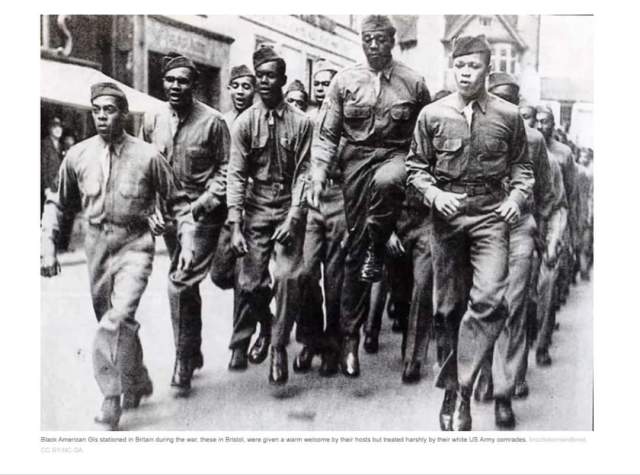
CHOC’LATE SOLDIERS FROM THE USA, tells the story of 140,000 Black American soldiers and thousands of British civilians who cross a racial divide to forge an unexpected bond. While serving in a segregated military, Black men and women do much of the U.S. Army’s “heavy lifting” by day, and introduce the British population to jazz, jitterbugging and Black American culture by night. For the first time, Black American soldiers experience what it is like to be treated as equals and as Americans.
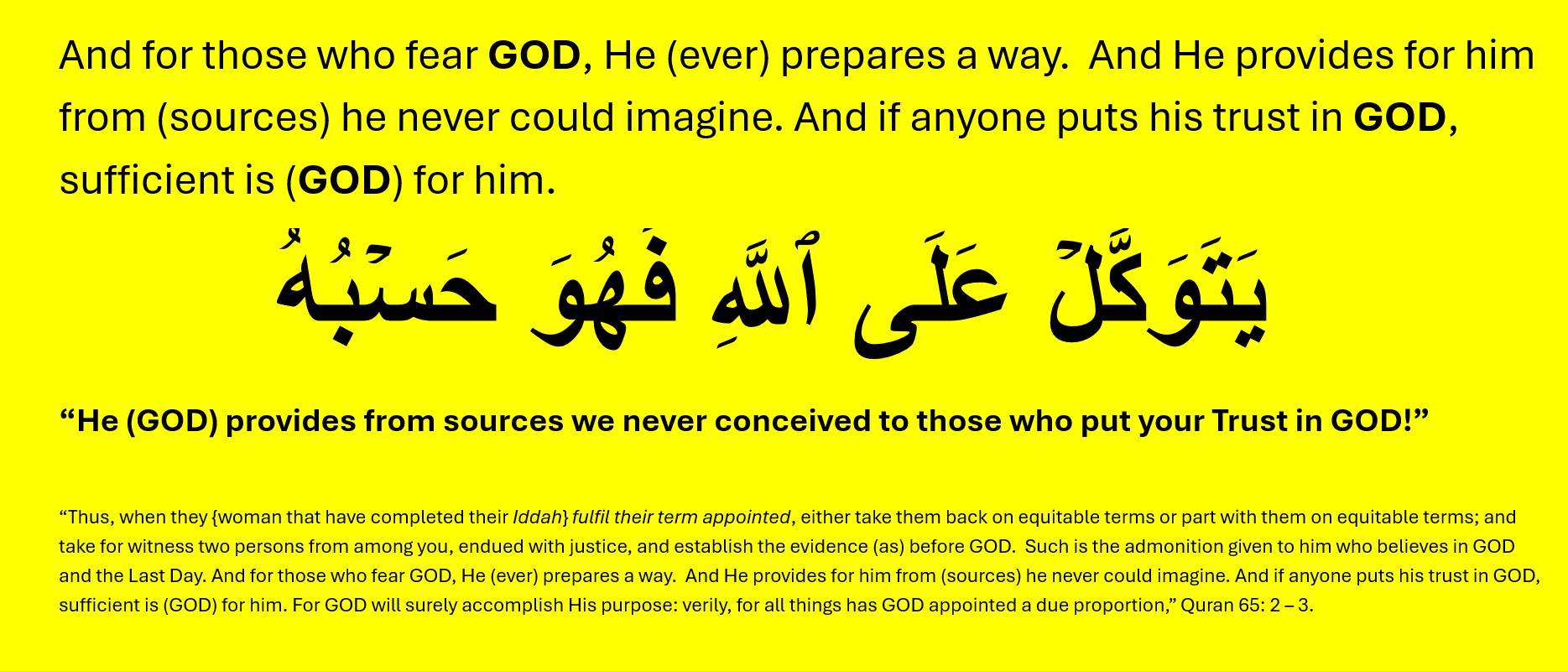
Be mindful of GOD and He will protect you, be mindful of GOD and He will be on your side. If you ask, ask of GOD, and if you seek help, seek it from GOD. Know that if the Ummah gather their strength to bring you benefit, they will never bring you benefit, except that which GOD has decreed for you. Know that if they gather their strength to harm you, they will never harm you, except with that which GOD has decreed against you. The pens have been raised and the pages are dry. related by At-Tirmidhi
The work of honoring the dead began right away all over the country, and several American towns claim to be the birthplace of Memorial Day. Researchers have traced the earliest annual commemoration to women who laid flowers on soldiers’ graves in the Civil War hospital town of Columbus, Miss., in April 1866. But historians like the Pulitzer Prize winner David Blight have tried to raise awareness of freed slaves who decorated soldiers’ graves a year earlier, to make sure their story gets told too.
According to Blight’s 2001 book Race and Reunion: The Civil War in American Memory, a commemoration organized by freed slaves and some white missionaries took place on May 1, 1865, in Charleston, S.C., at a former planters’ racetrack where Confederates held captured Union soldiers during the last year of the war. At least 257 prisoners died, many of disease, and were buried in unmarked graves, so black residents of Charleston decided to give them a proper burial.
GOD! there is none worthy of worship/prayer but Him – the Living, the Self-Subsisting, Eternal. No slumber can seize him nor sleep. His are all things in the heavens and on earth. Who is there can intercede in His presence except as He permits? He knows what (appears to His creatures as) Before or After or Behind them. Nor shall they compass any of His knowledge except as He wills. His Throne extends over the heavens and the earth, and He feels no fatigue in guarding and preserving them. For He is the Most High, the Supreme (in glory).
Let there be no compulsion in religion. Truth stands out clear from Error; whoever rejects Evil and believes in GOD has grasped the most trustworthy hand-hold, that never breaks. And GOD hears and knows all things.
GOD is the Protector of those who have faith: from the depths of darkness, He will lead them forth into light. Of those who reject faith they are patrons are the Evil Ones: from Light they will lead them forth into the depths of darkness. They will be companions of the Fire, to dwell therein (for ever).
“My father introduced me to husbands since I was twelve.” – Sudanese female on her forced marriage at age 17
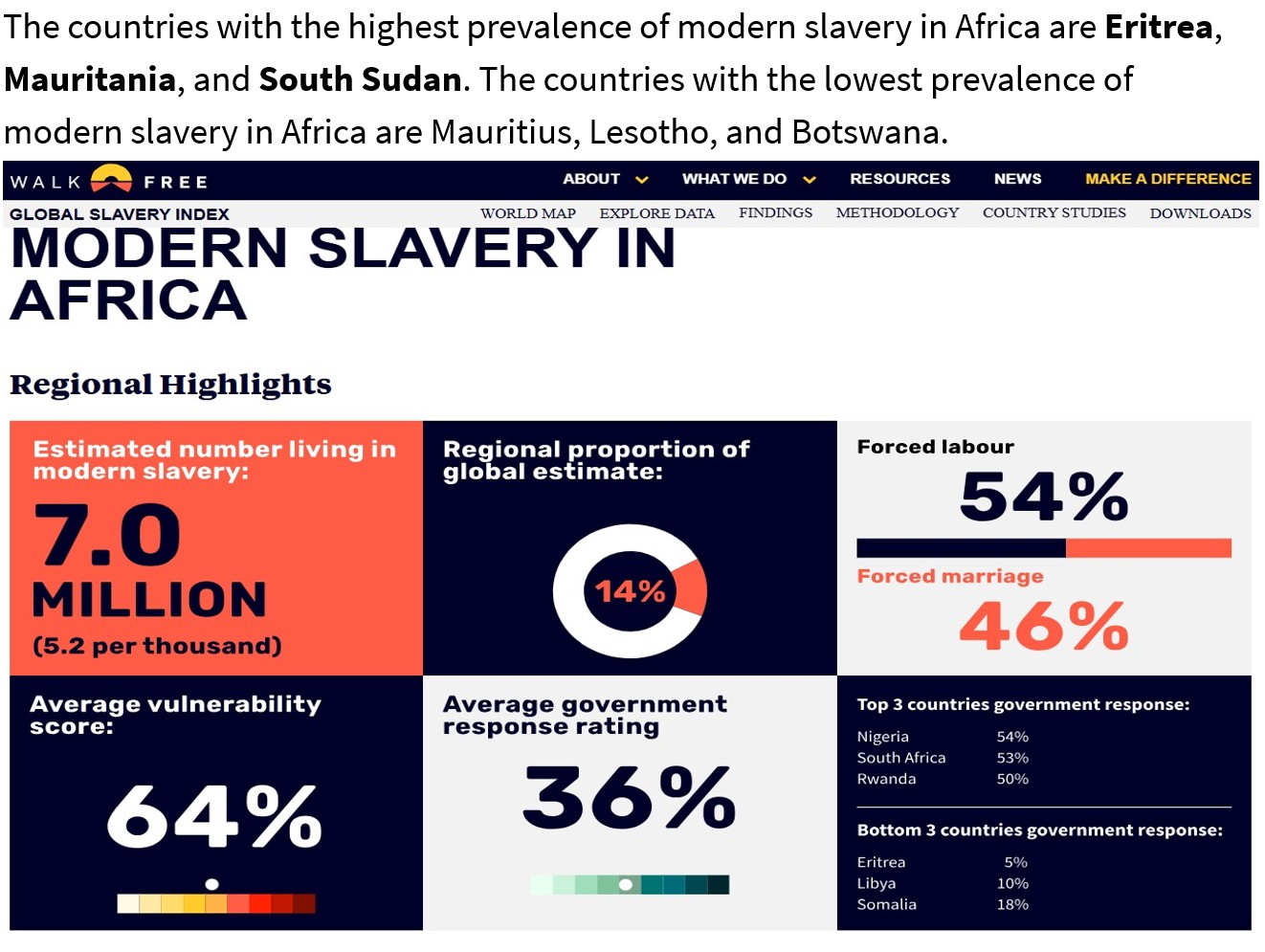
Africa is a vast and diverse region that accounts for 17 per cent of the world’s population. Modern slavery in Africa is driven by ongoing political instability, poverty, displacement of people due to conflict and climate change, and the impact of the COVID-19 pandemic. Modern slavery manifests differently throughout Africa; it occurs in every country in the region, while those with higher prevalence typically experience compounding vulnerability factors. More than 3.1 million Africans are in forced marriage, the drivers of which depend on factors in their location, such as the presence of conflict, poverty, or persistence of certain traditional practices. There are more than 3.8 million people in forced labour across Africa. At particularly high risk are adults and children who travel from rural and remote areas to urban centres seeking work. Higher rates of descent-based slavery and forced begging continue to occur in parts of the Sahel.
Over the past four years, many African countries have taken actions to improve their response to modern slavery. Nigeria and South Africa have taken the most action, while Eritrea and Libya have taken the least. South Sudan was excluded from the assessment of government action on modern slavery due to ongoing conflict and extreme disruption to government function. Much more needs to be done to provide support for survivors, strengthen laws to protect people, and develop national strategies to combat modern slavery.
What is the extent and nature of modern slavery in Africa? On any given day in 2021, an estimated 7 million men, women, and children were living in modern slavery in Africa, a prevalence of 5.2 people in modern slavery for every thousand people. Africa had the fourth highest prevalence of modern slavery among the five regions of the world, following the Arab States (10.1 per thousand), Europe and Central Asia (6.9), and Asia and the Pacific (6.8). Forced labour was the most common form of modern slavery in the region, at a rate of 2.9 per thousand people, while forced marriage was at 2.4 per thousand.
When considering the total number of people in forced marriage worldwide, 13 per cent (3.2 million) were in Africa, second to Asia and the Pacific, which at 65 per cent has by far the highest share of the world’s forced marriages. Fourteen per cent of all people in forced labour were in Africa (3.8 million), the third highest behind Asia and the Pacific (55 per cent) and Europe and Central Asia (15 per cent).
The countries with the highest prevalence of modern slavery in Africa are Eritrea, Mauritania, and South Sudan. The countries with the lowest prevalence of modern slavery in Africa are Mauritius, Lesotho, and Botswana.
How is forced labour affecting millions in Africa?
Nearly 4 million men, women, and children experience forced labour in Africa, particularly in the mining, agriculture, fishing, and domestic work sectors.1 African job seekers misled by traffickers with false promises are subjected to forced labour abroad, such as in the Gulf states.2 Children are also exploited in their pursuit of education. For example, under the confiage (trust) system in Togo, children from rural areas are sent to cities to complete their education and live with relatives, who may force them into domestic servitude.3 Nigerian girls seeking employment as domestic helpers to help pay for schooling are also subjected to domestic servitude.4 In Senegal, talibe (student, seeker) children in Quranic schools are forced to beg.
How does forced marriage in Africa impact women and girls?
In Africa, forced marriage particularly impacts women and girls. One in every 300 females in the region was in a forced marriage compared to one in every thousand males.6 In the aftermath of the COVID-19 pandemic, reports of child marriages increased in Sudan, Egypt,7 and parts of the Democratic Republic of the Congo (DRC),8 and they nearly doubled in communities across Senegal and Uganda.9 Women and girls living in conflict zones also experience forced and child marriage, including as a negative coping mechanism by families to protect them from further violence10 and by fighters who abduct, marry, and exploit women and girls as domestic and sexual slaves.11 Forced commercial sexual exploitation of women and girls is used as a weapon of war by both state and non-state groups, reportedly in the Central African Republic, the DRC, Somalia, South Sudan, Sudan,12 and by both parties to the civil war in Ethiopia’s Tigray region.13
“My father introduced me to husbands since I was twelve.” Sudanese female on her forced marriage at age 17






You must be logged in to post a comment.